
People first, tech second

Don't take climate tech for granted
The Climate tech PR crisis
The interest in climate tech as a “cool” internet and business word is going down 📉
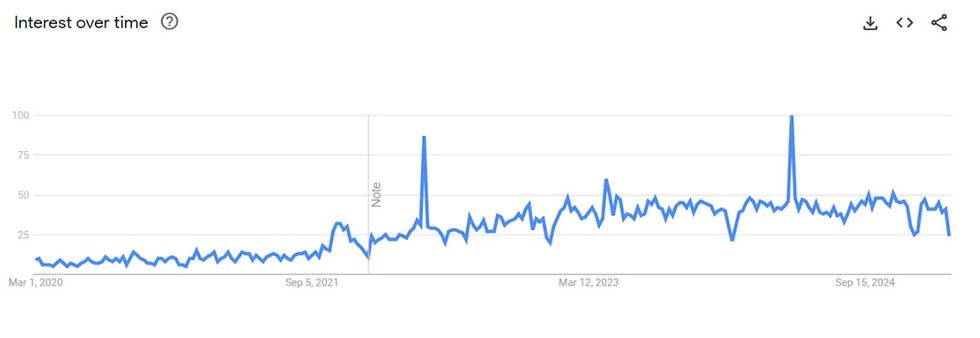
How many times climate tech has been Googled. Source: Google Trends
Climate tech as we knew it might be dead, already since last year, after all the hype it generated over 2021 and 2022 has left space to much more skepticism and ambiguity.
Now, those who can get rid of the name are doing it, and those who can’t need to prove that things will work out?
Technology is unpredictable; we don’t know if it will turn out as the solution we hope for. We might get to tens of different directions to solve the same problem by trying to reinvent the wheel multiple times or by falling into the better mousetrap fallacy.

Climate tech now has an identity crisis: will it work out? And what if it doesn’t?
There is no PR team here to tell us that everything is fine and that the planet will be out of the danger zone 10 years from now.
But sometimes, we tend to focus too much on the technology that we forget who runs it.
The community behind the climate tech movement has grown exponentially over the last few years.
This community is now feeling the pressure of:
New political u-turns on climate policies and commitments.
Investors’ skepticism and other shinier objects to follow (AI being the top one).
Market conditions are sometimes set at Extreme difficulty.
Plus, climate founders are experiencing challenges such as:
Lack of specialized knowledge and operational experience from venture capital firms/investors.
No playbooks to follow (aka, nobody has done it before).
Still, founders, investors, and operators are (and will continue to be) the catalysts of decarbonization.
They are the ones pushing innovations forward, taking huge risks with little to no demonstrable benefits, and, most importantly, they are the ones showing through action that avoiding tragedy is possible.
Without them, climate tech is just another buzzword. They are making it real, no PRs involved.
I’ll leave it here: we might see more attention towards equipping who is building what works with better tools rather than just building new things for the sake of doing it. This means enabling founders and teams to perform better with more support from investors, governments, and businesses after the initial check; rediscovering a human approach to innovation and wonders creation.
People first, tech second.
Link to the original post:


Between my PhD, a part-time job, and helping students with last-minute assignments, I've learned the hard way that tools don't save you people do. I struggled a lot during my college days, so now I'm really conscious about finding assignment help UK that actually listens before throwing solutions at you. This piece on people first, tech second hit home. Climate tech founders facing skepticism, no playbooks, extreme difficulty that's exactly how a stressed student feels. We don't need another shiny platform or automated template. We need someone who gets it, who stays in the mess with you until you find your way. Thanks for saying this out loud.
The idea of putting people first in tech felt very real and practical. I remember working on a group task where communication mattered more than tools. I once used do my assignment when I was overwhelmed and needed help organizing my thoughts. It showed me that technology should support people, not replace clear thinking and teamwork in everyday tasks.